 notabene
 What is notabene?
nota bene — the margin mark that means “note this well.”
notabene renders your repo’s Markdown/MDX as a navigable site with review comments right on the page, and ships the human↔agent review protocol that turns those comments into edits. The viewer is the support — the protocol is the product.
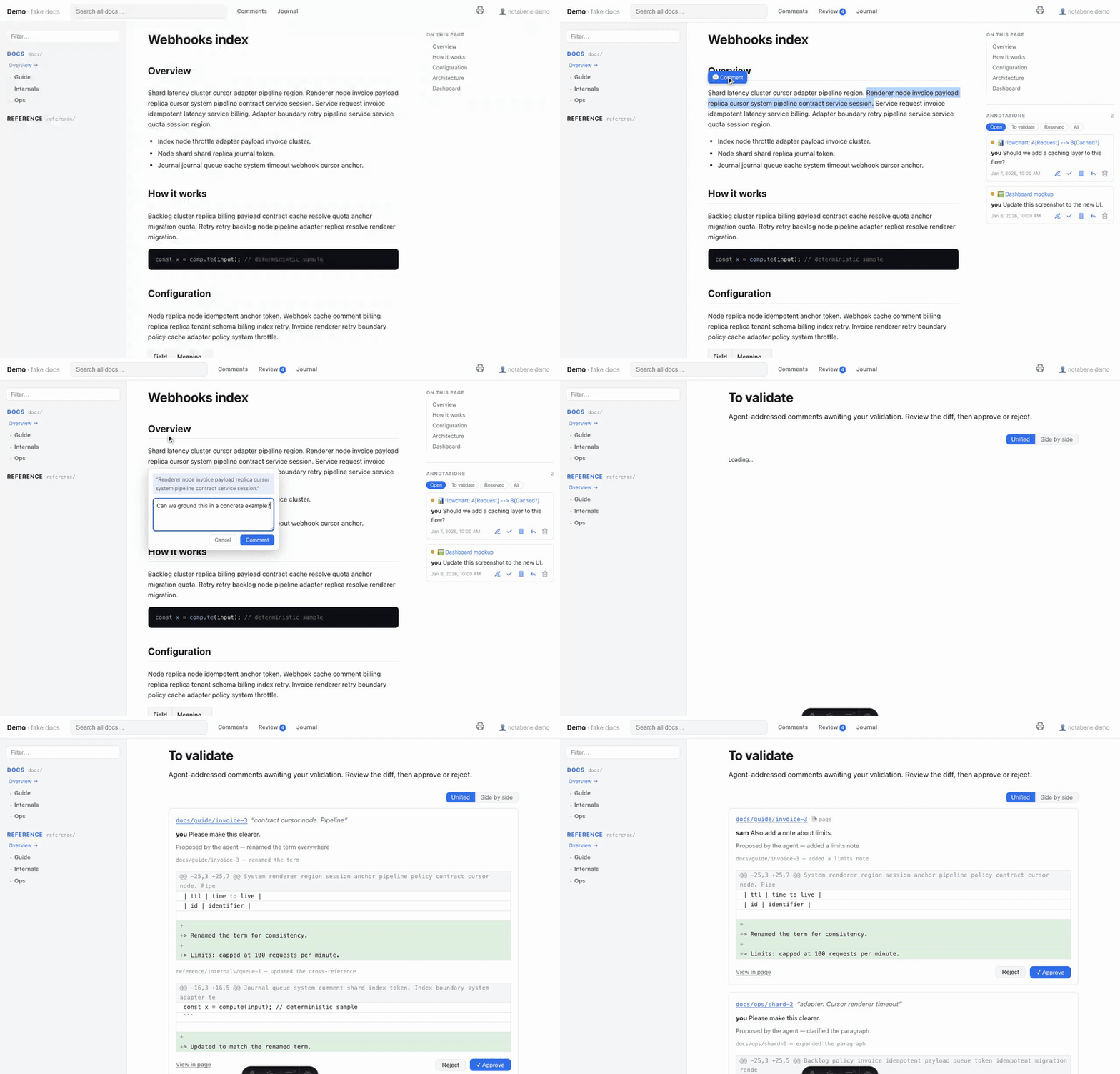
The problem it solves
Fixing or writing docs with an AI agent means turning every change into prose: quote the passage, name the section — “can you fix the wording in section 3” — then hope the agent re-finds the exact spot in the source. Past a couple of changes it’s a wall of instructions in one chat input. The real instruction was always simpler: this passage — change it like so.
notabene makes that the interface. Select the exact text on the rendered page — or a whole diagram or image — and leave a comment right there. The anchored comment is the instruction: located, unambiguous, nothing to quote. The agent reads the comments, edits the source faithfully, marks each resolved, and journals what changed & why.
The loop, in 30 seconds
npx notabene dev→ open the site, select any text → leave a comment (or comment a whole page, diagram or image). Threads, resolve, hold, a global/commentsview.- Tell your agent: “address the doc comments.”
- The agent reads
.notabene/, edits the docs faithfully, marks each comment resolved, and appends a journal entry (what / why / which comments). - Read the trail at
/journal— or validate each diff yourself in approve mode.
Everything is in your git
Comments and journal are plain JSON files under .notabene/ — no SaaS, no database,
no account. They travel with your repo, diff in PRs, and are readable by any agent: the
review protocol is file-I/O-first (no server, no port, no MCP required).
Where to go next
- Install — the npm renderer, the Claude Code plugin, or both.
- Your first review — from a comment to a journaled edit.
- Configuration — the one config file, by example: spaces, branding, navigation links and footer, custom home page.
- Customize the look — branding, design tokens, fonts, code theme, your own stylesheet.
- The review loop — auto vs. approve (human-in-the-loop diffs).
- Authoring docs — the rendering palette: GFM, Mermaid, code, links.
- Multi-language docs — EN/FR/… with clean URLs and a switcher.
- PDF export — print-ready views and bookmarked PDFs.
- Publish a public site — a read-only, agent-readable static site.
Looking for exhaustive tables instead? Head to the Reference space: the CLI, every config key, the frontmatter, the store contract and the safety model.