 notabene
 The review loop
The loop is the product: comments in, faithful edits out, everything journaled. It’s designed so any agent can run it — the protocol is a plain-text skill file that reads and writes the store directly.
How the agent works
Everything is discovered from notabene.config.mjs — nothing hardcoded, no server or
port required:
- Read the open, non-held comments from
<store>/(one JSON file per comment). - Locate the source page via
roots[], then resolve the text anchor tolerantly (the anchor stores the quoted text + surrounding context + nearest heading). - Edit the docs faithfully — a comment is a user decision.
- Mark the comment resolved (or
addressedin approve mode) and append the journal: one entry per pass, one change record per page touched, linked back to the comment ids. - Verify: the renderer build always runs, then
notabene lint(inter-doc links validated against the routes that build just emitted), then yourverify[]checks. - Report and ask before committing — never a silent commit, never a bulk delete.
Comments a reviewer puts on hold (⏸) are skipped — they’re your work-in-progress.
Steps 4 and 5 have CLI primitives so an agent never hand-edits the store JSON:
notabene comments done <id…> --note … --journal <entryId> picks the right status from
your review mode, and notabene comments verify audits what it wrote — statuses,
comment↔journal links in both directions, layout. It exits non-zero on a real problem, so
it doubles as a CI gate on the store your agents commit.
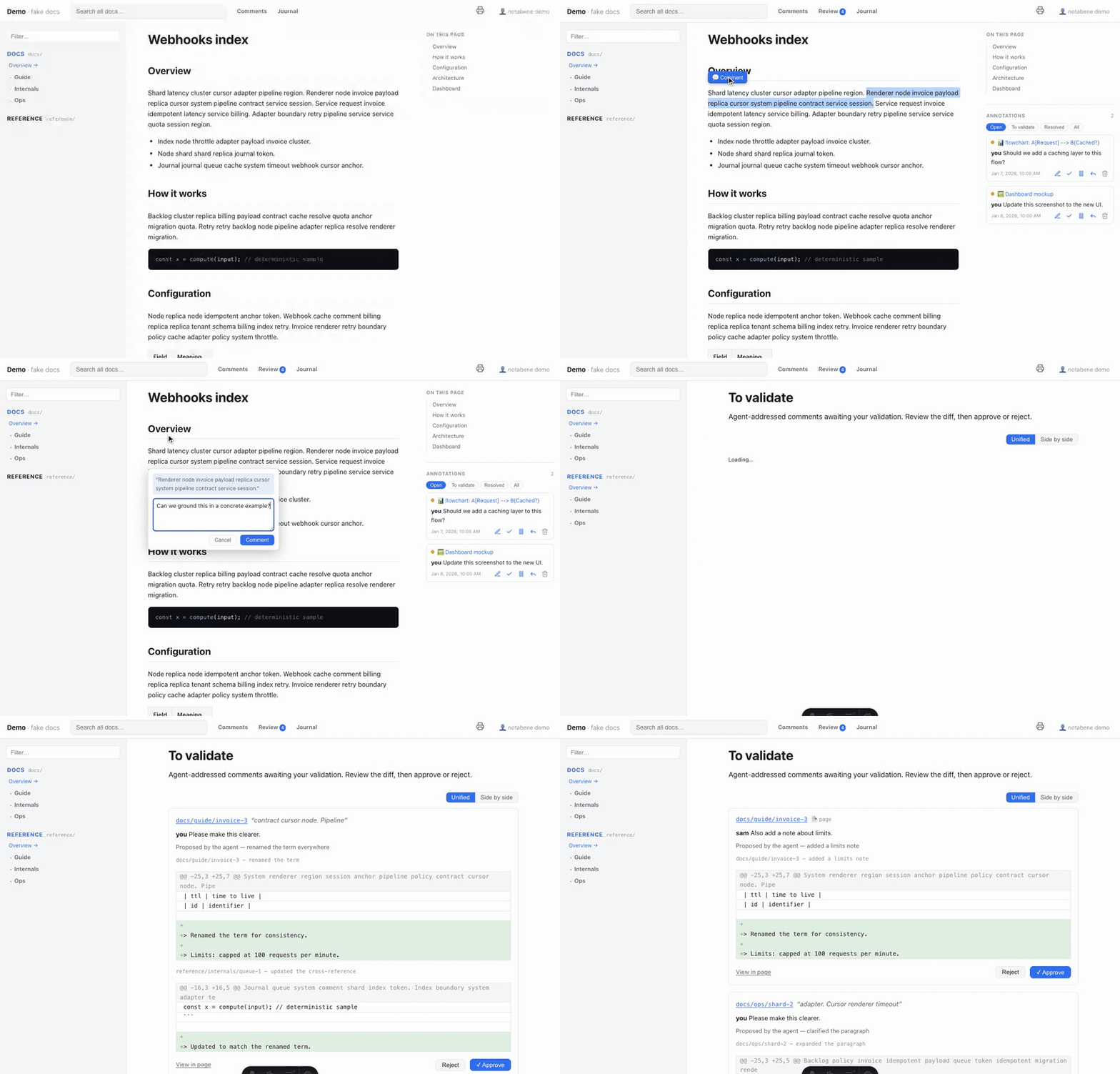
Approve mode: humans validate every edit
By default (review: "auto") the agent resolves comments directly. Set
review: "approve" for a human-in-the-loop flow:
- the agent edits and marks each comment
addressedinstead of resolved; - you validate at
/review(or the To validate filter on/comments); - you see the real git diff of everything that changed for that comment — cascades included (one comment can touch several pages);
- approve → resolved, or reject → reopened with your reason, which the agent reads on its next pass;
- the diff renders unified or side-by-side, and a Review badge in the header counts what’s waiting.
Using it from any agent
The protocol is a plain-text spec, and notabene init installs it in your repo so no
agent has to go looking for it:
<store>/protocol.md— the full spec, committed next to the comments it describes. Offline, no npm, no network. This is what you point any agent at.AGENTS.md— a bounded<!-- notabene:begin -->…<!-- notabene:end -->block that tells the agents which read it at startup (Codex CLI, Cursor, Gemini CLI, Zed, Amp…) where the comments and the protocol live. Nothing outside the markers is ever touched; opt out withinit --no-agents-md.
Both are refreshed by re-running notabene init (idempotent) — do that after moving the
store or renaming a space, and notabene doctor will tell you when they drift. The text
itself is this site’s agent protocol page — the
canonical one, with a Markdown twin in public builds for agents that browse;
npx -y @z29k/notabene@latest protocol prints the same thing offline.
In Claude Code the plugin skill is that protocol — it triggers on “address the doc comments” and needs no AGENTS.md. The store shape itself is a versioned public contract — see the store reference.